Showing posts with label time. Show all posts

2012-12-16

How to see the planets for yourself

You have almost certainly heard much about the planets of our Solar System, and have likely seen the beautiful pictures space probes have made of each of them from nearby. But what some people don't know is that you don't need to go to other planets to see them: they're all visible from Earth. In fact, a couple of them are just about the easiest things to find in the sky, and each of them is fun to see. So for those who are curious, but haven't seen the planets yet (or not all of them) I have written a little guide, starting with the easiest planet to see in 2013 and working my way up to the hardest. Give it a try some night, seeing another planet is not much harder than seeing the Moon once you know where (and when) to look! All you need is at least one eye and a clear sky.


Jupiter
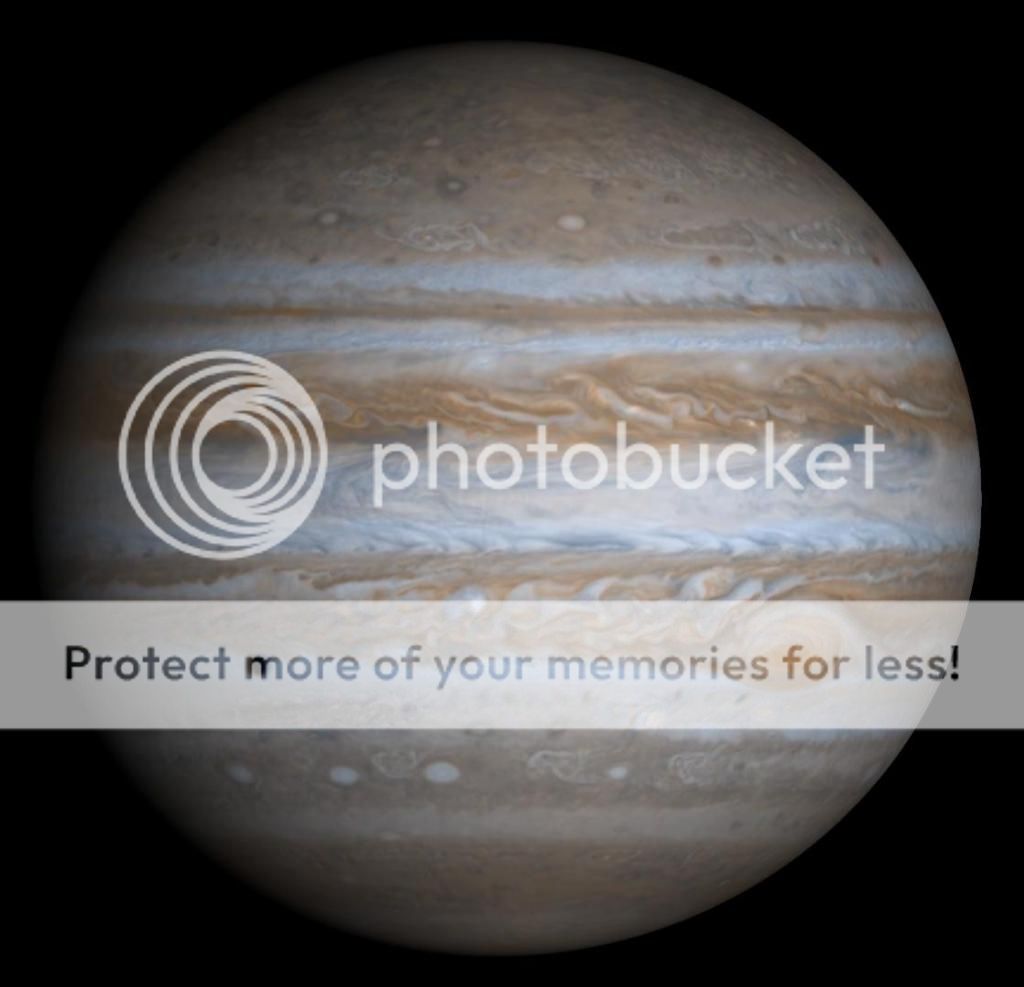
(Image credit: NASA)
The Romans named Jupiter after the king of their gods, and if you've ever seen it on a dark night, it's not hard to see why. Jupiter is far brighter than any star and easily dominates the night sky if the Moon isn't out. This makes it the easiest planet to see in many years, including 2013. Jupiter is very bright due to its enormous size, which means it reflects a lot of light.
Right now, Earth is passing between Jupiter and the Sun, and this means Jupiter is at its closest to us(and therefore brightest), and that Jupiter rises right as the Sun sets and sets as the Sun rises. That makes any cloudless night these months an awesome time to look at Jupiter. In the early evening, you can see it shine brightly in the east, even from the most light-polluted cities. Around midnight, it passes very high through the south, easily the brightest “star” in the sky. Early in the morning, it sinks down into the west as the Sun rises in the east. Due to Jupiter's brightness, you probably won't need a star chart or any knowledge of the sky to find it. It's brightness makes it stand out easily: for most of the night it's the brightest object in the sky other than the Moon (which, by the way, will approach Jupiter very closely in the sky on 26 December, and even cover it seen from South-America and Africa). But in case you need more help, it's in the constellation of Taurus. It's easy to find due to a large hexagon of very bright stars in the sky, often called the Winter Hexagon. It's near the star marking its right corner, Aldebaran, but way brighter than this star:

(Image of the brightest stars of the winter sky made using SpaceEngine. Jupiter is the bright object on the right of the large hexagon. Brighter stars are larger in the picture than smaller ones. It helps to look at this picture in full view)
While Earth is passing between Jupiter and the Sun now, it will slowly move away during 2013's early months. Jupiter will stay in the same area of sky, but will set earlier every day. By March, it'll be in the south around sunset, and sink into the west during evening, setting around midnight. In May and June, Jupiter will pass on the other side of the Sun and therefore be invisible from Earth. But in July it will become visible again very early in the morning, rising about three hours before the Sun in the east. In the final months of the year, Earth will approach Jupiter again and it will rise earlier all the time, so by December 2013 it will once again be visible the whole night long.
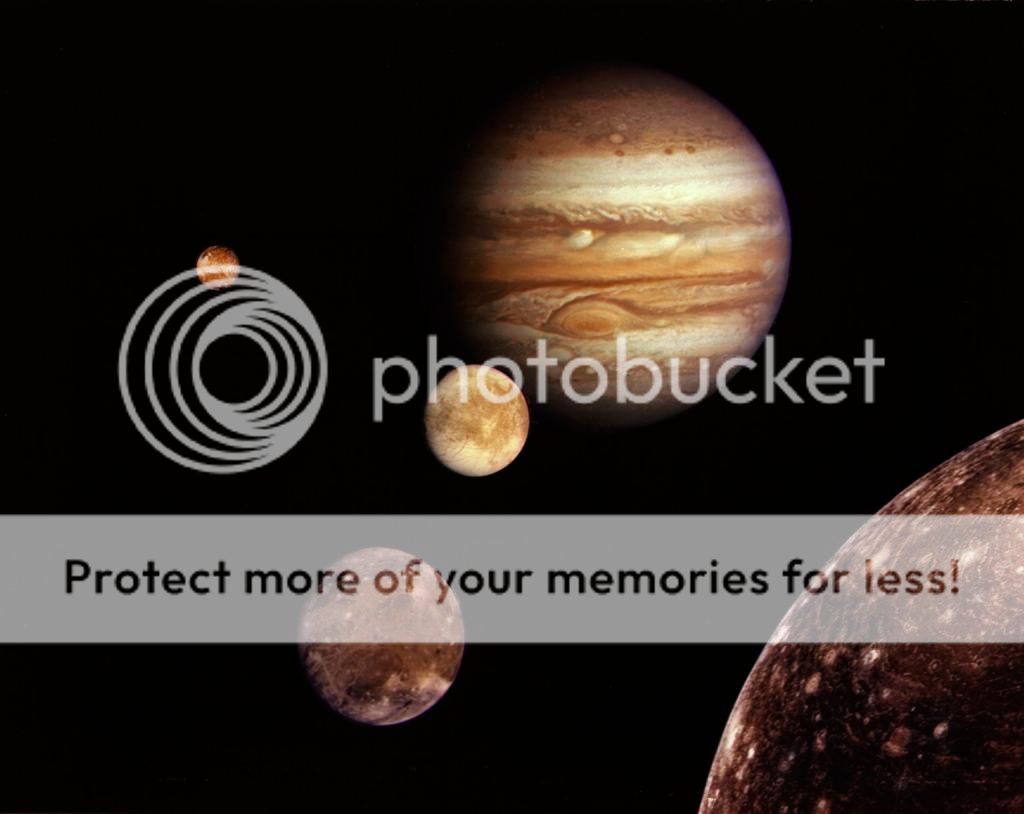
(Image credit: NASA)
Jupiter is a beautiful sight with the naked eye, but if you have binoculars or a telescope you can see something very cool: its four largest moons! They're called Io, Europa, Ganymede, and Callisto, and each is the size of a small planet (Ganymede is in fact larger than Mercury). The only reason we can't see them with the naked eye in the first place is that Jupiter's bright light is in the way, but with binoculars, even poor ones, you can see them separate from Jupiter. They're visible as four “stars” close to Jupiter (or three, or two, or occassionally just one; they often pass behind or before Jupiter so they're not visible), roughly on a straight line. If you look at them from day to day, you can see they're in different places each time due to their fast orbits. With good binoculars it also becomes possible to see Jupiter as more than a point of light, but actually see it as a sphere. You won't be able to see its beautiful clouds, though: you need a telescope for that.


Venus

(Image credit: NASA)
Maybe you have seen something very strange in the sky once. A mysterious light hovering above the western horizon in the evening, or maybe it was above the eastern horizon early in the morning before the Sun was up. It was obviously far too bright to be a star, but unlike a plane it didn't move at all. It just hung there silently. Was is a spaceship from another world?
Well, no. In fact, it was another world: Venus. Venus is ludicroudly bright, as much as six times brighter than Jupiter. Other than the Moon and the Sun, nothing in our skies is brighter. She gets so bright because A: she's the closest planet to Earth, B: she's covered in bright white clouds, reflecting a lot of light, and C: she's close to the Sun, so brightly lit. Venus is bright enough even to cast shadows in places that are very dark. (in any place in or near a city these very faint shadows are washed out by the light pollution though)
So if Venus is so bright, why do I consider Jupiter the easiest planet to see? Well, there's a catch: Venus is closer to the Sun than Earth, so in the sky she's always near the Sun. Jupiter can be nearly overhead in the sky in the middle of the night, but Venus is always near the Sun so it's usually day when she's in the sky. However, at dawn or dusk she is often visible and makes even Jupiter look faint then. Right now Venus rises shortly before the Sun, but she's about to pass behind it, becoming invisible to us Earthlings from mid-January on. She won't emerge on the Sun's other side until June, and then she'll be visible low in the evening sky for the rest of the year. She'll follow the setting Sun, setting one to three hours after it and gracing the western evening sky with her brightness. You really don't need a star chart to see Venus; it's a matter of looking to the west in the second half of the year about an hour after the Sun sets: Venus is unmistakable.
Much like Jupiter, Venus also has a bonus if you look at her with binoculars. They need to be binoculars on a tripod, though: holding them in your hand won't make them steady enough. But if you have binoculars on a tripod and aim them at Venus, you can probably just make out that the planet doesn't look round, but has the shape of a crescent Moon. This is because Venus is closer to the Sun than Earth, so we're looking at it more or less from behind.
I've said it before: Venus is bright. But in fact, she's so bright she's visible at day! You've probably seen the Moon at day some time, but not Venus. This is because Venus is very easy to miss. Unlike the Moon, she's just a tiny little dot of white among a sea of blue sky. But she's visible if you know where to look. October will likely be the best time to try: Venus will be at her farthest away from the Sun. To try it, find a spot where the Sun is just out of your sight: this will prevent your eyes hurting from looking roughly in its direction. So you need to be in the shadow, but left of the Sun (in the east) you need to be able to see the sky. Sitting in a place where a tree or building covers the Sun is probably the best idea.
Venus will be a bit over forty degrees to the Sun's east. To measure out these forty degrees, spread your hand out at armlength. Provided you are not very weirdly proportioned, the distance from the tip of your thumb to the tip of your pinky is roughly twenty degrees at arm's length. So you look two of these distances left of the Sun. The best times to do this would likely be 14:30 (at that time, Venus will approximately at the same height as the Sun). Most likely, however, you will see nothing there at first, just blue sky. Well, keep looking at the area, scanning it carefully with your eyes: the detail of a tiny white spot against the blue sky is too slight to be picked up by your peripheral vision, so you need to see it with the centre of your sight. Don't give up: it takes a while to find.
There's another situation when Venus is visible at day: when it passes exactly between the Sun and Earth. It's visible as a little black dot during these Venus transits. This happened in June, but unfortunately won't happen again until 2117.


Saturn

(Image credit: NASA)
Just like Jupiter, Saturn is huge. But it's almost twice as far away from the Sun, so it gets less light, and is also further away from Earth. Because of this Saturn isn't as bright as Jupiter, but it's still a bright planet. It's about as bright as the brightest stars, so you'll need a little knowledge of the constellations to recognise it. Not much, though, as it's bright enough to easily stand out among all but the brightest stars. Saturn is in between the constellations Virgo and Libra at the moment, and fortunately there's only one bright star nearby:
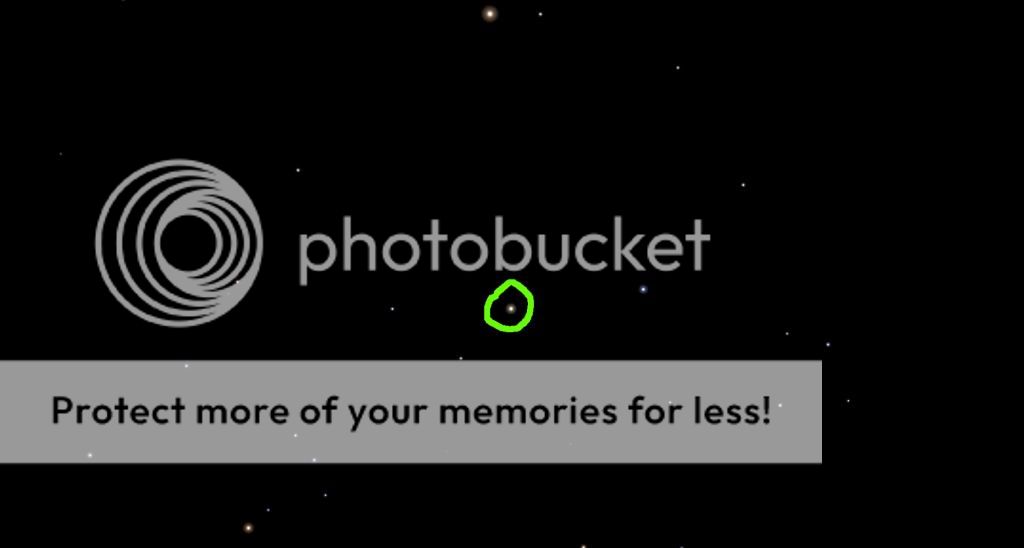
(Image of the spring sky near Saturn made using SpaceEngine. The circled object is Saturn. Looking at the picture in full view helps)
Saturn doesn't rise until the morning right now, not long before sunrise. But in the first few months of 2013 it'll rise earlier all the time, until Earth passes between Saturn and the Sun in April, when it'll be visible all night long as it rises when the Sun sets and sets when the Sun rises. From June to September it'll set during the night, and therefore will be visible in the evening only. During October and November, Saturn will pass behind the Sun, and therefore will be invisible. In December it'll start rising before the Sun in the early morning again.
If you look at the southern sky in April or May, you will see two bright “stars” near each other, with a third one higher up in the sky. Saturn is the brightest of these three, at the lower left of the triangle they form. It's also the only one that's yellow-whitish; Spica (the star near Saturn) is a little bluish, while Arcturus (the star above Saturn and Spica) is a bit reddish. There are likely other stars visible as well, but none of them are as bright as Saturn.
With a binocular on a tripod, Saturn's beautiful rings can just be seen. To see them clearly separate from the planet you need a telescope, but in binoculars the planet looks oddly elongated, a bit egg-like due to the rings. Saturn also has one big moon, Titan, which is just in the range of binoculars. It's very big, bigger than Mercury, but Saturn's distance to the Sun makes it a lot harder to see than Jupiter's big moons. A faint star nearby Saturn is likely to be Titan, particularly one that moves from day to day.


Mars
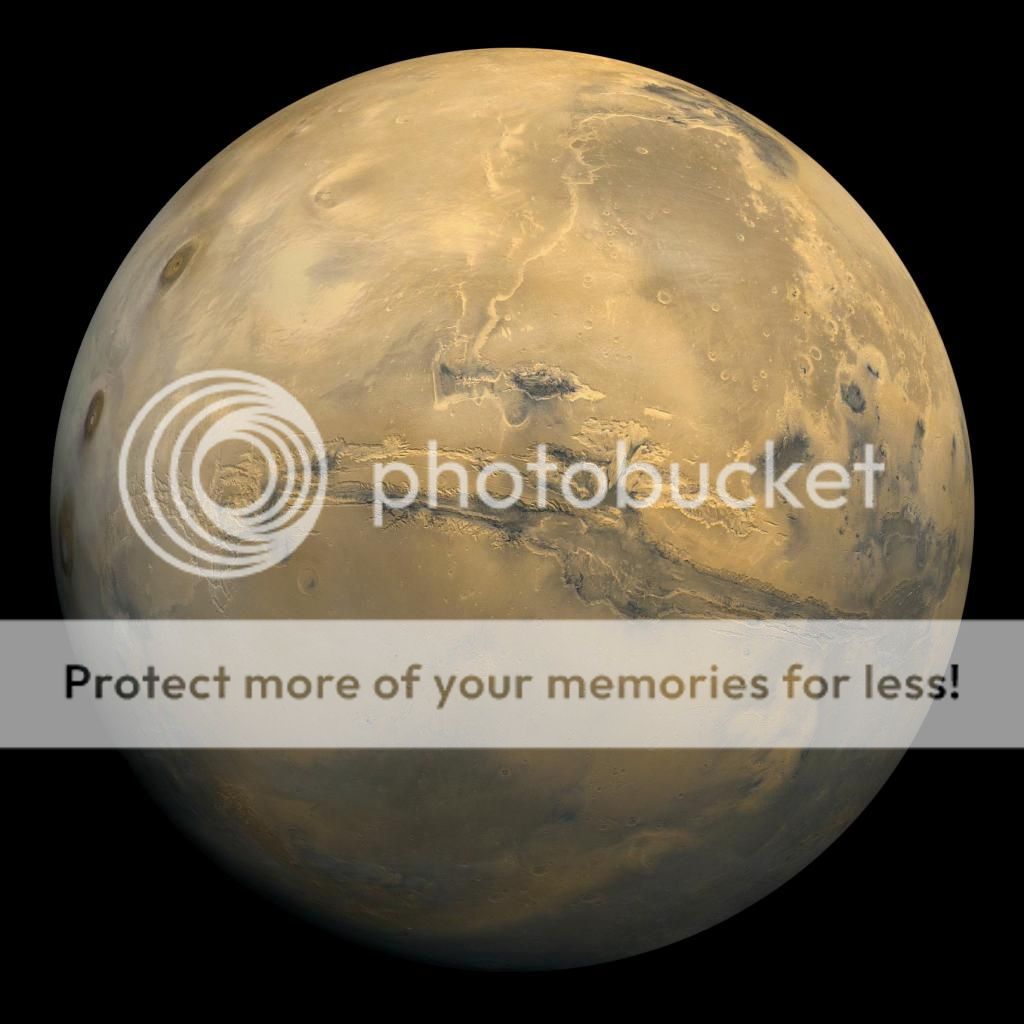
(Image credit: NASA)
After Venus, Mars is the closest planet to Earth. This is both a blessing and a curse for seeing it: when Earth passes between Mars and the Sun, the planets get very close and Mars becomes brighter than any star, sometimes even brighter than Jupiter. It's a fiercely bright red thing in the sky at these times. But Mars' proximity also means it moves very fast compared to Earth, and that at its furthest, it's as much as five times farther away than its closest. It's very faint by comparison during these times, and this is one problem.
The other problem is this: Mars orbits the Sun once every 687 days*, while Jupiter takes twelve years over an orbit. This means that if Mars and Jupiter were both behind the Sun seen from Earth (and thus invisible), we need to wait only half a year for the Earth to pass between Jupiter and the Sun: Jupiter moves little in that time. Mars, on the other hand, will be long gone after half a year, and has completed a good part of its orbit by then, so while it's not precisely on the opposite side of the Sun any more it's still quite far away and it'll be another half year before Earth gets close to it.
This means there are great Mars years, when the planets are close to each other all year long and Mars is really bright. It also means there are awful Mars years, when Mars is in hiding behind the Sun most of the year. 2013 is one of these awful years, and this is why I've listed it behind Saturn (in a good year I might have listed it as the easiest to see planet). In January 2013, Mars sets less than two hours after the Sun. After this, it'll pass behind the Sun for most of the year, and won't be visible again until August, when it'll start rising before the Sun in the early mornings (along with Jupiter, but Jupiter will be as fiercely bright as always while Mars will look like an average star). It'll slowly rise earlier and become brighter, but even in December it still doesn't rise until 1:00 and is no brighter than Saturn.
Mars' rapid movement also makes it hard to give a star chart for its location, as it moves constellations about once every two months, and is constantly on the move within those constellations. So instead of making a dozen star charts, I will tell you in which constellations it is in each month. Then you can look that constellation up on Wikipedia for its star chart; the bright star that's not on it will be Mars. In December 2012 and January 2013, it's in Capricorn, low in the southwest in the evening. In July, it reappears in the northeastern morning sky in Taurus. In August it'll be in Gemini, and in September in Cancer. It will spend October and November in Leo, and end the year in Virgo.


Mercury
(Image credit: NASA)
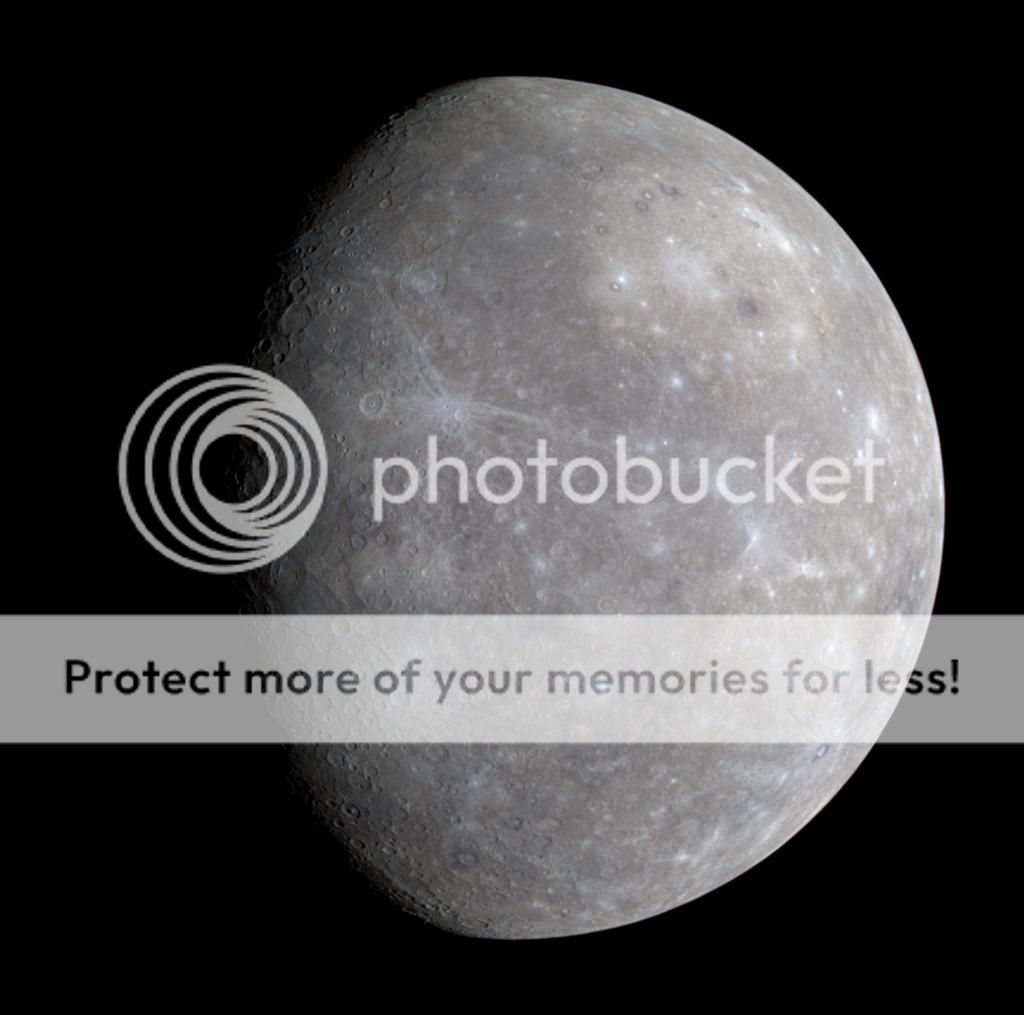
Mercury is the smallest planet, but it's also closest to the Sun and therefore very brightly lit. This makes it quite bright despite its size: under favourable conditions it's brighter than any star, though not as bright as Jupiter. There's one problem, however: it's closer to the Sun than even Venus. While Venus gets a decent distance away from the Sun, Mercury is always sticking very close to it and never visible out of twilight. Even when it's visible in twilight, it'll be low above the still-lit horizon the Sun just set under/is about to rise above. This makes it far more difficult to see than the previous planets. In fact, I have never seen it myself.
When Mercury gets far enough from the Sun to be visible in twilight, it's only for a few weeks at most: the planet orbits in only 88 days, so it moves fast. It's visible in the early mornings right now, but only until 20 December. It's pretty close to the far brighter Venus, actually. After 20 December, it'll pass behind the Sun, but it'll be visible in the evening, just after sunset, from 8 to 26 February. Then it'll pass between Earth and the Sun, but when it reaches the other side of the Sun it'll never come high enough to be visible. But half an orbit later it'll reemerge in the evening sky from 19 May to 22 June, getting quite close to Venus once again in June. It passes before the Sun, and shows up in the mornings again from 24 July to 16 August. When it reaches the other side of its orbit it'll once again never get high enough to see, and its final visibility of the year will be from 7 November to 7 December.
I've established how hard Mercury is to see, but there are things that make it easier: Venus or the Moon being close by is the main one, since they are bright enough to be seen easily in twilight. The Moon (a crescent) will be close to Mercury on 11 February, 10 and 11 July, 5 August, and 1 December. From 24 to 27 May it'll be close to Venus and Jupiter. It'll also pass near Saturn on 26 November, but since Saturn is fainter than Mercury this is unlikely to help much. A star chart wouldn't be of much help either, as the Sun's glow near the horizon washes out the stars.


Uranus

(Image credit: NASA)
Uranus is only half as big as Saturn, and twice as far away from both Earth and the Sun's light. Due to this, it's far dimmer, so dim in fact it wasn't discovered until 1781. Uranus is just bright enough to be seen with the naked eye outside of cities, but this is hard to do. With binoculars or a telescope it's visible quite easily, with just one problem: how do you distinguish it from thousands of dim stars?
Well, with a map of course. I've found it myself using a map like the one linked below: it's a tiny blue light in a telescope, which becomes a minuscule little blue sphere at high magnification. Right now Uranus is in Pisces, where it'll be visible in the evenings during the first months of the year, behind the Sun in April and May, visible in the morning from June to September, and visible all night long as the Earth passes between it and the Sun in October and November. It's a difficult planet to find, but very cool to have seen.
The chart is located here: http://dcford.org.uk/findercharts.php?obj=uranus&year=2013. It's no mistake that Uranus doubles back on its path in August: this is a perspective effect caused by Earth overtaking it.


Neptune

(Image credit: NASA)
Neptune is even farther away than Uranus, and so even dimmer. It's theoretically visible to the naked eye under absolutely ideal conditions (very, very far away from any lights (We're talking Antarctica here), an incredibly clear sky, preferably on a mountain top or in space, when the Sun is very far beneath the horizon and Neptune high in the sky, there's no Moon, no Venus, and you've got very good eyes. Then you might just be able to glimpse a hint of it), but I don't think anyone has ever actually seen it with the naked eye. It's still visible through binoculars and telescopes though (though I have never seen it myself). You'll need a map of the area of Aquarius where it can be found (best in August, when Earth passes between Neptune and the Sun). This map is fortunately supplied by the same site that gave us the one for Uranus: http://dcford.org.uk/findercharts.php?obj=neptune&year=2013


*=Coincidentally** exactly as long as an elephant pregnancy.
**=Or not. Maybe elephants come from Mars.

2012-11-23

What happens when the Sun runs out of fuel?

Last week I talked about how the Sun works, and how it formed in the first place. If you haven't read that post, you might want to read it now after all. Because this one more or less follows it, and I'll assume you've read it so I don't annoy people who did by explaining things twice.


I talked about how the Sun gets its energy from fusing hydrogen into helium, preventing gravity from collapsing it further with the energy produced in the core. Yet I didn't touch an important question: what happens when the hydrogen runs out?


Well, the good news is that that won't happen for a long time. The Sun has been fusing hydrogen for five billion years, and is only halfway through its supply. The Sun still has five billion more years left before its hydrogen runs out. An amount of time like that can't be imagined at all, really. In that time, the entirety of life on Earth happened; all of human civilisation could be repeated 500000 times in it. Think of the oldest person you know; perhaps a grandparent, or a parent, or just someone else. Imagine how many seconds their life has lasted so far. Well, take double that amount, but take years instead of seconds, and you've got five billion years. And that's the amount of time we'll have to go into the future to see what happens when the Sun runs out of fuel.


I can't even begin to speculate what Earth looks like this far into the future, but let's assume it's still there at least. If humans still have any descendants now, they probably look nothing like us any more. The first thing you should realise is that the Sun running out of fuel doesn't mean the Sun now consists of 100% helium. In fact, most of the Sun still consists of 75% hydrogen and 24% helium. However, all this hydrogen does the Sun no good: the pressure and temperature simply aren't large enough to overcome the powerful electric repulsion the atoms have for each other in most of the Sun. In the only place where it's so hot and so compressed hydrogen atoms can collide - the core - there is only helium left by now. You'll recall a hydrogen nucleus consists of one positive particle named a proton, while a helium nucleus consists of two protons and two non-charged particles named neutrons, all held together by a powerful force named the strong nuclear force. Helium's two protons repel other helium more strongly than hydrogen's single proton repels other hydrogen, and this means the helium nuclei don't collide yet.


So what happens? Gravity, for the first time in ten billion years, can compress the Sun's core further, so it begins to shrink. The pressure increases, the helium is pressed even more closely together, and as a result the core's temperature rises. The core gets smaller and smaller and hotter and hotter, and this increased heat warms up the layer around the core. While this layer was of course always millions of degrees hot, it never was quite hot enough for nuclear fusion, so it still consists mostly of hydrogen. But as the temperature here increases, hydrogen starts to fuse in this layer around the core. Crisis averted, you may think. Unfortunately, it's not averted.


You see, this shell of fusing hydrogen now holds up the outer layers of the Sun just like the core did, but with an important difference: the non-fusing core still lies under it, and it's still contracting. It's not just getting smaller from the pressure of its own gravity, but also from the energy produced all around it. So the core keeps shrinking and heating up, and in doing so it also continues to heat up the shell where fusion now takes place. When the Sun was fusing hydrogen in its core, it did so at about fifteen million degrees, but now in the shell around the core, it could easily be fifty million degrees. At this higher temperature, the hydrogen atoms bounce around even more rapidly and powerfully, and therefore they collide more often. Much more often. The shell fusion burns through its supply of hydrogen way faster than the core did, and creates far more energy. A thousand times more energy, possibly even ten thousand times more! The Sun used to be a 385 Yottawatt lightbulb, but now it's becoming a 3850000 Yottawatt one.


This enormous increase in energy causes the outer layers of the Sun to be pushed away. The fusion energy pushing from inside always used to balance out with gravity, but now it's getting much stronger, making gravity lose temporarily. The Sun's outer layers expand, and so the Sun grows larger. And as it grows, the energy produced inside, while much greater than it used to be, is spread out over a far bigger surface than it used to, and this means every square kilometre of surface gets less energy than it used to and cools down. As the Sun grows several times as large as it used to be, its nearly white light becomes more pronouncedly yellow. As it keeps expanding further and further, the Sun cools down further, slowly going orange.


At about this point, Mercury meets its fiery maker as the Sun's surface expands beyond its orbit. The rocky little world melts as the Sun's surface gets closer, and finally gets engulfed by it. Yet it survives as a single piece of molten rock, still orbiting inside the Sun, for a surprisingly long time: as the Sun expanded, its mass didn't increase, so its outer layers have become incredibly sparse: it's the same amount of Sun, just spread out over a far larger space. The Sun's sparse outer layers still erode Mercury and slow down its orbit so it falls deeper into the Sun, making it reach warmer and denser layers where it will truly be destroyed, but this will take a long time.


And the Sun keeps expanding: Venus soon shares Mercury's fate as it too gets engulfed by the ever-huger star, which is now a fiery red. So what about Earth? Well, eventually the Sun's expansion stops, and this will be a bit outside Earth's current orbit. So that seems to be the end of the world, but there's a 'but': as the Sun's outer layers grow, they become very tenuous and get very far away from the centre of its gravity. Combined with their heat, the Sun is leaking lots of gas now, and getting lighter in the process. The Sun getting lighter causes its planets to move into higher orbits, and this might just be enough to save Earth. As knowledge stands now, there seems to be about a fifty-fifty chance of Earth following Mercury and Venus in or it orbiting just above the Sun's surface. I'll assume it survives for the rest of this post.


Not that that will actually save it: the Sun increased in brightness by at least a thousand times, so while the Sun's surface is only half as hot as it is now, its proximity and size still roast the Earth. The oceans boiled away, the atmosphere heated up so much the planet's gravity couldn't hold it down any more, and eventually the surface itself, as well as the Moon's, melts. Seen from this molten world, the Sun would fill almost the entire sky; a gigantic red ball of fire. Its surface wouldn't be nearly as bright as it is now, though; you could probably look straight into it while squinting, and even see darker spots on it with the naked eye. However, its enormously increased size in the sky still makes it far brighter than it ever was, even if you can now look into it.


Even aside from its colour and dimmer surface, the Sun wouldn't look much like it used to. The outer layers now contain gigantic convection cells which take material from as deep as the hydrogen-fusing shell and take it all the way to the surface, while gas at the surface gets submerged and taken into the deep. These gigantic convection cells and the Sun's gravity's tenuous hold on its distant surface make the Sun bubble and bulge like a boiling pot of water, even distorting its shape: the Sun no longer is a sphere, but an odd, more-or-less-round bulgy thing. The Sun is now a red giant.


(Image made using SpaceEngine)


The core, meanwhile, has reached a pressure so incredibly high it simply can't get any smaller. The helium is squeezed so incredibly tightly together it really can't get any closer without “breaking” the particles. In stars several times heavier than the Sun, this will actually happen and cause extremely strange things to happen. But the Sun's mass isn't big enough to pack the helium any tighter. You might think the helium will begin fusing too at some point if it's this close together. And you're right: it does. Two helium nuclei collide on occasion, and form a nucleus with four protons and four neutrons named Beryllium-8. There's just one problem: Beryllium-8 is a very unstable nucleus. The strong nuclear force just doesn't seem to have a good grip on it, and within a fraction of a second, it falls apart into two helium nuclei again. So the helium-fusion isn't going anywhere.


In the shell around the core, hydrogen fusion happens at an incredible rate. The Sun's days of slow and stable fusion are over; the hydrogen in the shell around the core gets squandered a thousand times faster than the core hydrogen was. Within only a few million years, the hydrogen here is gone too, and gravity once again has free play. The entire Sun's mass once again rests on the core, which is already as small as it could be, and now surrounded by a layer of new helium. This causes the core to heat up even further.


When the core reaches a hundred million degrees, something happens. The helium, which has occasionally been fusing with other helium to form beryllium-8, reaches a point where fusion is so common that it becomes possible for the beryllium-8 formed in the fusion of two helium nuclei to be hit by another helium nucleus before it decays. The third helium nucleus adds to the nucleus so that it has six protons and six neutrons; it's become carbon. And carbon is quite stable: you should know, as you mainly consist of the stuff. Sometimes, the carbon gets hit by a fourth helium nucleus, fusing to form oxygen. The fusion of three helium nuclei to carbon – or four to oxygen - creates a great deal of energy, and in the strange conditions that now rule in the Sun's core, this energy immediately sets off more helium fusion, which causes more helium fusion in a chain reaction that makes the Sun burn through a fifth of its helium in a single moment called the helium-flash.


The helium-flash is incredibly energetic, and makes the core expand, yet the Sun is so huge and distended by now it's barely noticeable by the time the flash reaches the surface. But after the helium-flash, the Sun's core continues fusing helium in the core at a slower pace. With fusion once again taking place in the core, the Sun's energy production lowers, and gravity contracts the red giant it has become. It looks like the Sun might be returning to its old days: it shrinks, becomes hotter, and since gravity has a stronger hold on the smaller surface, the convection cells stop making the Sun look like a bulgy bubbling mess. It once again becomes smooth and round and yellowish. The Sun doesn't shrink down all the way to its old size, but for a while, it has entered a second youth.


But this second youth doesn't last as long as the first. Not only does the Sun still burn much brighter than it used to, squandering its resources rapidly, but helium fusion also produces far less energy than hydrogen fusion, and therefore happens quicker to produce the same energy. The Sun's second youth lasts about fifty million years before trouble arises once again as all the helium in the core has fused to carbon and oxygen. The core contracts to its absolute limit once again, this time causing helium to fuse in the shell around it. But the helium-fusion in the shell around the core produces so much heat that in another shell around the first shell, hydrogen is also fusing to helium now. The Sun's inside is a bit like an onion now, with all these layers, and its heat quickly makes it grow to a red giant again. But this time, its growth doesn't make it reach a stable endsize: the Sun keeps growing and shrinking alternately. That's because the helium fusion is very sensitive to temperature, and in the shell where helium fuses to carbon and oxygen, the temperature varies. This causes the Sun's energy output to fluctuate wildly, and with it, the Sun's outer layers contract and expand rapidly.


Every time the Sun expands, it loses a lot of gas. The outer layers are just too far away from the core; there is very little gravity working on them at this distance. So the hot gas escapes from the Sun's gravity, expanding and cooling down like a smoke ring. Every few weeks or months, the Sun expands and contracts again, and every time it blows a bit of its own outer layers away. A heavier star will eventually begin to fuse carbon and oxygen to neon, magnesium, sulphur, and silicon; and then fuse silicon and sulphur to iron and create all the other light elements in the periodic table before exploding in an explosion brighter than an entire galaxy, in which heavier elements like gold and uranium are also formed. But our Sun isn't heavy enough to reach the 600 million degrees needed to fuse carbon or oxygen, and slowly blows its outer layers away instead, creating a beautiful nebula around our Solar System.


(Image credit: NASA and ESA)


As the Sun loses its mass, the fusion in the core slows down, with gravity pulling less hard. The core cools down as the pressure decreases. Over the course of millions of years, fusion eventually stops entirely, as all that's left of the Sun is the core: an incredibly dense thing the size of the Earth consisting mainly of carbon and oxygen. It glows a fierce white-bluish from its heat, but it's so tiny that the Earth now cools down deep below freezing, its Sun becoming a single bright point of white light in the sky. The Sun has become a white dwarf, and there's nothing left for it to do but to slowly cool down over billions of years. The white dwarf slowly becomes cooler and fainter, its white light eventually fading to yellow. Then orange, and then it only shines a very faint red light. Eventually that last light dims too, and all that's left is a cold, dark dense object called a black dwarf. The Sun is dead.


But the universe is still young. Stars continue to be formed, and the nebula that was once the Sun's outer layers - a very sparse cloud of mainly hydrogen and helium, with a bit of the carbon and oxygen fused by the Sun - mixes with other similar clouds, and becomes part of new suns, and their solar systems. The silicon and iron Earth consists of, the carbon in our bodies, the nitrogen and oxygen in our air, were all once created inside a star. Only hydrogen and helium were formed in the Big Bang; all the heavier elements come from stars. Carl Sagan used to say: “We're made of star-stuff.” And the Sun's atoms too will become part of worlds of star-stuff in the far future.

2011-01-08

Time travel guidelines

If you have recently acquired a time machine, then please, read through these guidelines carefully before using it.

The Timeline

If you're going to travel through time, the first thing you should try to find out is the shape of the timeline. This is very important to know as a time traveler, as it will affect how causality works and what happens if you try to change the past.There are three possibilities, the Linear timeline,the Changeable timeline, and the Branching timeline, which I will each explain and what the results of attempting to make a grandfather paradox (killing your grandfather before your father was born, thus preventing you from ever being born to kill him) would be.

In a Linear timeline, past, present, and future are all one line, and when you go back in the past, you will have already gone back there, and since whatever you will do in the past will have already happened, you can never change it. If you attempted to kill your own grandfather in a linear time, you would fail, as you have evidently been born, so your grandfather apparently survived your assassination attempt. Or the man you thought was your grandfather was not actually your real grandfather. Either way, whatever happens was part of the timeline all along, and therefore you can't create a paradox.

In a Changeable timeline, you can actually change the past by going back in time. As a result, whatever you do in the past will have an effect on your present self. This is the only timeline where you can actually cause the grandfather paradox, as killing your grandfather would actually have an effect on you. While this timeline may seem the most intuitive, the fact that paradoxes could be created here seems to indicate it is also the least likely.

In a Branching timeline, the universe splits into two universes whenever someting happens, and one of the possible outcomes becomes a reality in each of the universes. Thus, when you go back in time you will arrive in a new branch of the timeline. If you tried the grandfather paradox here, your grandfather would die in the new timeline, but you would be fine since the grandfather from your own timeline was alive and well. Paradoxes would be impossible in this one too.

If you built a time machine, presumably you discovered the shape of the timeline during this. If you didn't, try this: leave your house for about an hour. When you come back, look into an empty drawer and make sure it is actually empty. Then, go 30 minutes in the past and put a sock in the drawer. Go back to the future (about an hour would suffice so you don't run into yourself), and check the drawer. If the sock isn't there, you're probably in a Linear timeline. You just have to worry about the fact that apperantly someone broke into your house and took the sock while you were away. If the sock is there, you are probably in a Changeable or Branching timeline. Repeat this experiment a few times to be sure. If you keep finding you actually made small changes to the past, you're now certain you are not in a Linear timeline. Finding out whether you are in a Changeable or Branching timeline will be a bit trickier, but there is a way that you can use for it.

Go back in time 3000 years. Depart to the present immediately, to make sure you don't actually change anything. If you're in a Changeable timeline, your effect on the timeline should be negligible, and history will have played out just as you remembered it. However, if you're in a Branching timeline, your arrival in 989 BCE will have created a new alternate timeline where you have arrived in. At every small little happening in history, even the smallest, this universe split again, and you end up in the year 2011 CE in a random one of these universes. Thus, when you get out of your time machine in your new timeline's present, history will probably have happened vastly differently. By the way, this is probably a good moment to mention the fact that it will be impossible to return to our original timeline, though with many careful time trips you may manage to end up in a very similar one.

So now that you know the shape of the timeline, this tells you how careful you'll want to be in the past. If you're in a Linear timeline, you don't have to worry about changing the future, and only have to watch out for your own neck. If you're in a Changeable timeline, be very careful, as a single mistake can vastly change the whole world history, and you may find your own present gone if you are not very careful. Thanks to the butterfly effect, even a really small change could culminate into massive differences over a long period of time. If you are in a Branching timeline, changing the past means going back to a present similar to your own present will be difficult, but by traveling back even farther you can return to a present similar to the one you knew. 

Some things to watch out for

When you arrive, if your time machine does not have some way to tell you the date, try to find out the year. Don't go asking random strangers what year it is, though, as that question is considered weird. If newspapers are printed in this time, just look at the date on them. Or go into a store and ask to buy a calendar. If you're in the past, some careful references to historical events in casual conversation can help you pinpoint the date (And if an event turns out not to have happened yet and you're asked about it, just say it was just something minor in your home country).

Try to blend in as well as possible. When you're time traveling, try to wear something that will look not completely bizarre in most eras. When you arrive, try to switch it for era appropriate clothing as soon as possible. Looking at how most people around you dress can provide you with a good guideline.

Don't tell people you're a time traveler. If you're lucky, they'll think your nuts and ignore you. If you're only slightly lucky, they'll think you're nuts and lock you up. If you're unlucky, they'll believe you, kill you, and steal your time machine.

Don't act smug about your era when you're in another era. First of all, talking about your era strongly borders on telling them you're a time traveler. Also remember that you're a guest in their era. Acting condescendingly about their era is considered rude. If you're in the past, remember that change is gradual, and that to reach the situation of the world in your home era, it had to pass through other eras, and that your own home era may be viewed just as condescendingly in the future. If you're in the future, remember that they went through the present and went on from that. Presumably they have good reasons for changes made since your own home era.

Whether you're in the past, alternate present, or future, always wash your hands with ethanol or another bacteria killing substance. A squirtbottle of ethanol can be found in most labs and classrooms, and they presumably buy them from somewhere, so find out where and buy some to take on your journey. The past had many potent diseases that your lazy 21st century immune system will not be prepared for. In the future new diseases will have evolved that you will not have had yet, so you can easily be infected by them. There's also the danger of spreading your own germs around and causing diseases.

Interactions with Yourself

When you travel through time, meeting yourself should generally be avoided, especially in a Changeable timeline (Who knows how the timeline will change when your past self meets your present self). If you're in a Linear timeline and you can't remember ever having met yourself, then don't try it as you will not succeed and may in fact be run over or something before you reach your past self. Even in a Branching timeline it should be avoided, as meeting yourself is a great way to get into trouble. Meeting your future self can be considered somewhat safer, as both parties will be aware of the situation (you're in it and your future self remembers it unless your in a Branching timeline), and your future self will probably remember the encounter and thus be able to prepare for it, but I still discourage it.

To avoid meeting yourself, try keeping a log of where you were at any given time. This can also come in handy for many other reasons. Just make sure it doesn't fall into the wrong hands (Wouldn't want to make it too easy for Terminators targetting you).

If you HAVE to interact with yourself and can't hide your identity, there are some basic rules:

1: NEVER kill yourself. This one should go without saying, but aparrently it doesn't. Killing yourself is never a good idea, especially not in a Changeable timeline, where you will in fact cause a paradox. 

2: Avoid confusion between you. If you have a middle name, now is finally the time to use it. One of you (If it's the home era of either of you, that should be the guest) uses his/her middle name as a first name. Alternatively, you can try nicknames, numbers, or letters. If your in the home era of either of you, that person always gets first pick. If you both traveled to a year that's not your home era, just work it out like adults.

3: Talking about avoiding confusion: have some sort of password to your own mind, which you can use to prove you are really the same person. Never tell this password to anyone, and never write it down, and if someone knows your password, assume they are either yourself or someone deeply trusted by yourself. This one will be more effective if you think of that password even before you even consider time traveling. Seriously, choose a mind password right now. Your future self may thank you for it.

4: If you're in a Changeable timeline, watch out for paradoxes. During interaction with yourself, these are very easy to cause. In a Branching timeline, try not to get your other self killed and/or in big trouble and/or with a completely ruined life/world. While paradoxes may not occur, that person is still you and you don't want that kind of stuff to happen to you, do you? In a Linear timeline, be careful not to do anything you can't remember while interacting with your past self. If you tried it, evidently you were stopped by something, and that something may actually be very dangerous to you.

Three is a crowd

Don't visit the same moment more than twice. While avoiding one other you is quite doable, avoiding two or more other yous will quickly cause a mess. There's also the problem that the chance increases that people who know you see you at the same time in different locations when there's more you's running around. Watch Primer. They went back in time across the same 4 days multiple times, and made a real mess. That's the kind of thing you want to avoid.

Danger

Speaking of Primer: time travel can be hideously complicated. Try watching Primer and understanding it the first time through. That's the kind of complicated you'll be dealing with. Time travel is an inherently complex activity, and should not be attempted unless your mind can keep track of it all.

Time travel is also an inherently dangerous activity. Even discounting the possibility of flaws in your time machine, danger lurks everywhere. The past was quite often a dangerous time, full of violence and diseases. In the present, you have to always be watchful of running into yourself (or, if that is part of your plan, to prevent trouble if you do, see the section 'Interactions with yourself' for that). If you go into the future, you never know what you might find, and if you're really unlucky you could end up appearing straight in the middle of a nuclear detonation. In a Changeable timeline, even a slight change in the past could forever change the present, and quite possibly not for the better. Any change in the past in a Changeable or Branching timeline could make it very difficult to return to the version of the present you call home. Your time machine could get destroyed or stolen in a different era and you;d be stuck there forever.

P.S.: I just thought of another handy tip: If you don't need to get to a specific date, but just a year, try going at Carnival or a similar holiday featuring people dressing up and lots of alcohol. Even if you completely dick up your attempts to blendin with the time, you won't stand out.

2011-01-01

2011

2011 just started, so happy new year and all that. I kind of liked 2010 on a personal level, though it was pretty sucky on a global level. We had the Haïti earthquake, the eruption of that volcano on Iceland with the completely unpronounceable name and the ensuing mayhem, everyone going nuts about the football world cup (How can people find 22 millionaires running after a little ball so interesting?), Leslie Nielsen died, the Republicans won the American House of Representatives elections (I have no love for the Democrats, but at least they're better than the Republicans), the new Dutch cabinet is even more right-wing than the previous one, and the American plans for new manned missions to the Moon have been canceled (The one good thing Bush ever did).
Still, I had a lot of fun in 2010. I started playing Dungeons & Dragons, rediscovered the Pokémon games, read a lot of good books, went on vacation to Switzerland and saw mountains, and some more fun things. I just hope 2011 will be better.

2010-12-22

Winter solstice

Winter solstice just passed (At 23:38 UTC, to be precise). That means the Earth has just passed the point in its orbit where the North Pole is pointing farthest away from the Sun, and as such it's the longest night on the northern hemisphere (And of course 21 and 22 December are logically this year's shortest days, with the Sun lowest on the sky thanks to that). From now on, the Sun will be getting higher and higher in the sky and the days will get longer and the nights shorter.

Yet, strangely, winter has officially only just started. I think it's kind of weird that the season we generally identify will cold and snow and the sort is actually the season where the Sun is climbing higher. This kind of weird placement of the seasons also means most of March is in the winter, even though the weather frequently can get very warm in March. If I had designed the seasons, I wouldn't have had them go from solstice to equinox or equinox to solstice, but I would have had the solstices and equinoces in the middle of each season: Winter would be from 6 November to 6 February, Spring would be from 6 February to 6 May, Summer from 6 May to 6 August, and Autumn from 6 August to 6 November. Like that, the seasons would follow the weather and the position of the Sun much better than the system we use now.

Anyway, spare a thought for the poor people living on the tropic of capricorn who now have the Sun shine from straight above them. Must be awfully warm, and frankly I greatly prefer the cold and snow we are experiencing over here.